

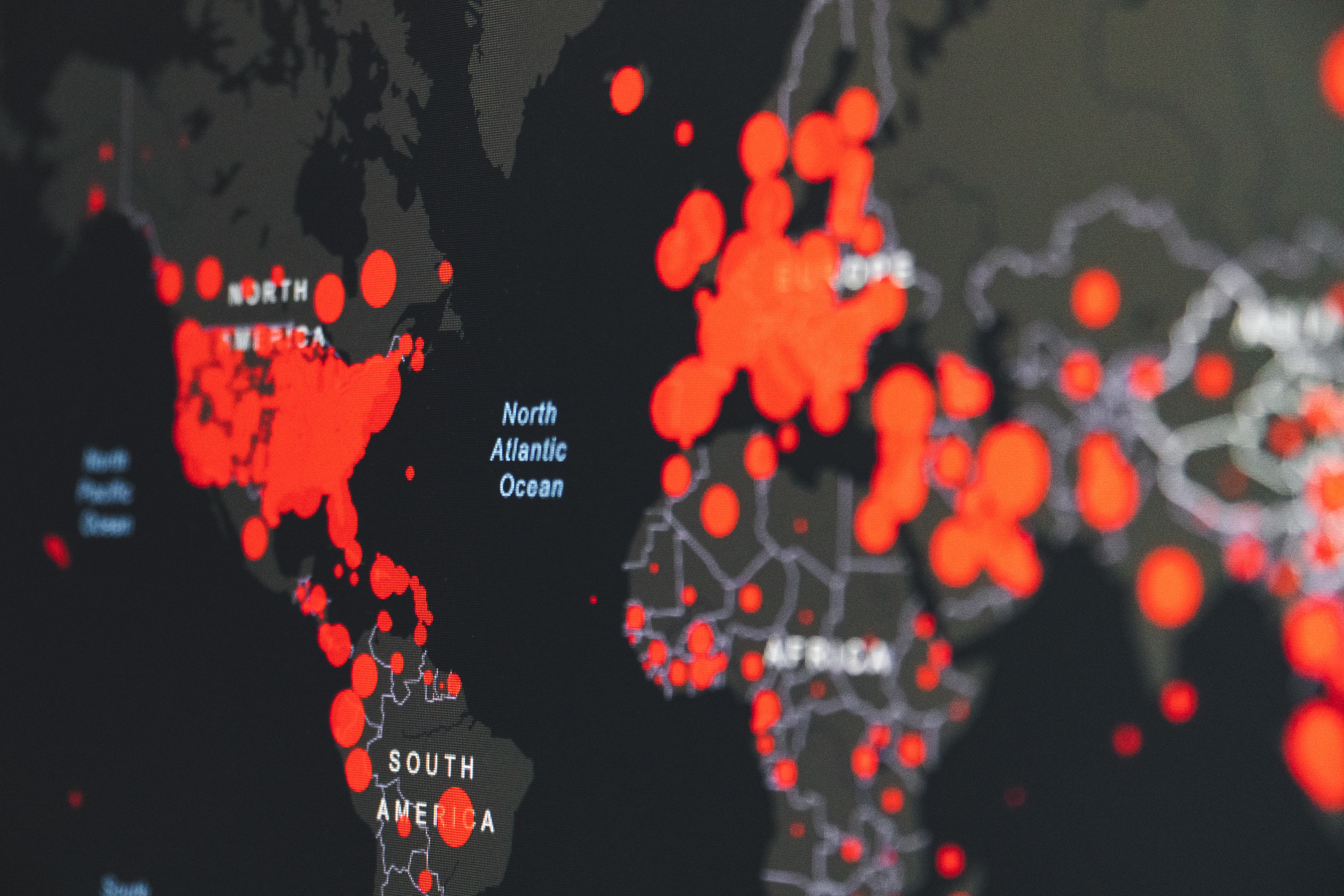

Ever since Covid-19 created the havoc, it has highlighted the importance of the word “Pandemic”. Even the common man without the knowledge of medical science frequently seen uttering the word. As in the case of Corona virus affecting larger population in multiple continents of the world, it perfectly suits the term “Pandemic”.
Pandemic
“Pandemic” means a particular disease affecting a large number of population at the same time in various section of the world in different continents.
Pandemic has history of origin back to centuries back. In every decade a pandemic is striking with immense loss of human and economic life. In 1918-1919 the Spanish flu took away millions of lives. The devastation caused so deep trauma that human memory is still not able to forget till now. Another pandemic caused by SARS(severe acute respiratory distress syndrome) in China, Hongkong, south-east Asia in 2002. The symptoms of SARS were very similar to Covid-19.

Credit–John Hopkins medicine(SARS)

( Credit–The Guardian– Spanish Flu Pandemic)
Plague Pandemic–
Plague is caused by bacillus Yersinia pestis. First pandemic was the Justinian Plague of 541 CE. It was originated in Ethiopia in Africa and spread to Egypt. It was the bubonic plague with characteristic buboes and septicaemia. It then spread west to Alexandria and east to Gaza, Jerusalem then spread to both sides of Mediterranean.
The ”Black death” of Europe in 1347 to 1352
It was the second pandemic started at 1347. It was first in Europe seaports then spread to central Asia like Crimea and Ukraine.
The third pandemic emerged in Chinese province of Yunan and spread to Hong Kong then to India.
Influenza pandemic 1918
Influenza pandemic also known as Spanish flu had killed millions of people in 1918. It was one of the horror story in the history of pandemic ever known. Starting from Europe, it quickly spread throughout the world in a very short time.
COVID-19 Pandemic
Starting from from China in late 2019, it spread quickly in 2020 creating havoc in a short span of time. Notorious about the Corona virus is that like influenza, it changed its genetic make up very quickly, making it very difficult to combat. The oro nasal route of spread infected millions of people in a very short time with millions of deaths. Particularly the second wave was most devastating. It was due to the highly virulent Delta strain. The world has made a lot progress in the vaccination drive as so many pharma companies have come up with effective vaccines.
The most effective way to deal with the Pandemic
Vaccination has proved to be the most effective way of combating the pandemic or epidemic. Vaccine produces antibodies in our blood to fight the disease producing antigens.
Herd immunity in combating Pandemic
Through mass vaccination, a protective level of antibodies are produced in a larger section of people in the community. This is called as herd immunity. It is probably the most effective way to fight the pandemic or epidemic.
The Global Preparedness Monitoring Board(GPMB) is an independent monitoring body in collaboration between WHO and World Bank , created in response to recommendations by the UN Secretary General’s Global Health crises task force in 2017. It is the supreme monitoring body for the worldwide pandemic and disasters affecting human life. The GPMB’s 2020 report, A World in Disorder, noted that how the COVID-19 was a collective failure to take pandemic prevention, preparedness and response seriously and failure to act proactively.
The center for disease control(CDC) adopted the Pandemic Severity Assessment Framework (PSAF) to assess the the severity of pandemics. Previously case fatality rate was used the assessed the severity of pandemics. Case fatality rate is the number of deaths per 100 infected people. It is a term used to assess the severity of a disease.
Management
The main strategies is the containment and mitigation. Containment is done in the early phase to limit the spread of disease. Mitigation is the effective measure to control the disease with treatment measures and vaccination.
What is Epidemic?
“Epidemic” means sudden outbreak of a disease in explosive form in a particular area or locality. The number of cases are certainly outpace the usual cases found normally. For example- measles cases are rarely found after rampant vaccination. In case of sudden resurgence of cases in a particular geographical area in excess number denotes the occurrence of “Epidemic “. Similarly polio has been eradicated in multiple subcontinents in the world. Detection of a single case in a country where it is declared eradicated is also epidemic.

Source- CDC
The furious Ebola virus outbreak in 2014-15 in West Africa was another devasting episode in the history of pandemics.
The diseases having potential epidemic spread are influenza, Covid-19, ebola, plaque, cholera, SARS, MERS, yellow fever. Many of these infectious diseases have the potential to develop as pandemic from epidemic.
“Endemic” term used for a disease constantly present in a geographical area. Like malaria in Africa, it is present throughout the year.
In developing countries some infectious diseases are seen all the time irrespective of age ,sex, ethnicity like malaria, typhoid, tuberculosis.


