

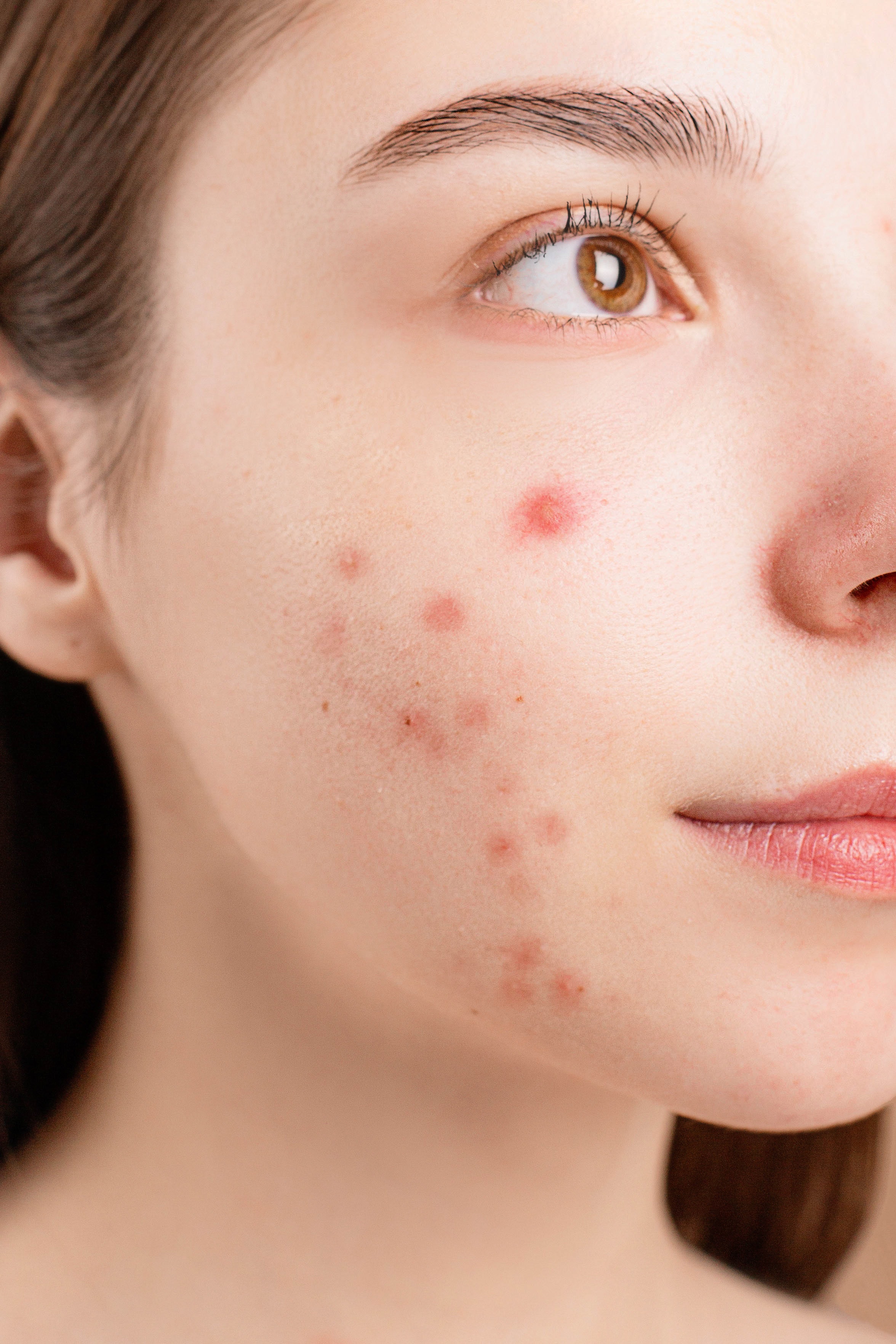

Acne vulgaris occurs in almost all peripubertal children. It occurs mostly in adolescent and young population. It mostly occurs due to inflammation due to Propionibacterium acnes causing inflammation of pilosebaceous gland. The condition is usually self-limiting . During adolescence, under the level of high androgenic hormone the condition exaggerates. Mostly under the influence DHEA(dehydroepiandrosterone) there is proliferation of pilosebaceous gland.
Aggravating factors–
• Junk foods, chocolates
• Anxiety, stress
• Oily face creams
• Pollution
• Hormonal imbalance
• High sugar containing foods- Diets reach in high sugar or high glycaemic index causes hyperinsulinemia or high insulin level. High insulin levels in turn affect the IGF-1 levels aiding in proliferation of keratinocytes. Raised insulin levels also increase the level of androgens and increase in sebum production.
• Dairy products- High dairy products contain insulin like growth factors(IGF-1) which helps in proliferation of sebocytes aggravating acne conditions. IGF-1 receptors are found in keratinocytes and increase in their levels positively co-relates with acne lesions. During puberty also the levels of IGF-1 increase under the influence of growth hormone.
Grades of Acne–
• Comedones– Open comedones are due to plugging of pilosebaceous glands on the skin surface. Closed comedones are plugging of keratin below the skin surface.
• Papules with inflammatory erythema
• Eythematous papules with pustules
• Nodulocystic acne

Photo credit- lecturio.com
Complications of acne–
• Scars in face– The healing of acne lesions may leave some scars in face difficult to fade.
• Anxiety, Depression– Recurrent chronic pimples cause mental embarrassment which leads to depression.
Treatment of Acne–
1. Oral therapy- oral antibiotics like erythromycin, clarithromycin are very effective against acne. Other alternatives are azithromycin, tetracycline.
2. Topical therapy- Topical applications are very effective in reducing sebum production and controlling inflammation.
Topical benzyl peroxide, salicylates very effective in treating acne. Benzyl peroxide is anti-bacterial agent very popular topical agent for treatment of acne. It kills the bacteria responsible for the inflammation and unclogs the pores.
Salicylates softens the keratin plugs.
3. Vitamin A ingredients- Oral vitamin A like isotretinoin help in halting proliferation of abnormal keratinocytes and maintaining epithelial integrity. Oral isotretinoin is also helpful in treatment of severe form of acne like nodulocystic acne lesions.
Topical retinoids are available in gels, ointments, creams. They are available in different strengths like 0.025%, 0.5%. and 0.1%. Vitamin A are toxic in higher doses. They should be prescribed by concerned physician with strict monitoring.
Relevant studies —
Lucky AW study shows the prevalence and severity is correlated with pubertal maturation in boys. Comedonal acne lesions are more frequent.
Hormonal factors involved in acne lesions is well established. Arora MK study on systematic reviews the increased levels of androgens, IGF-1 in acne vulgaris.


